
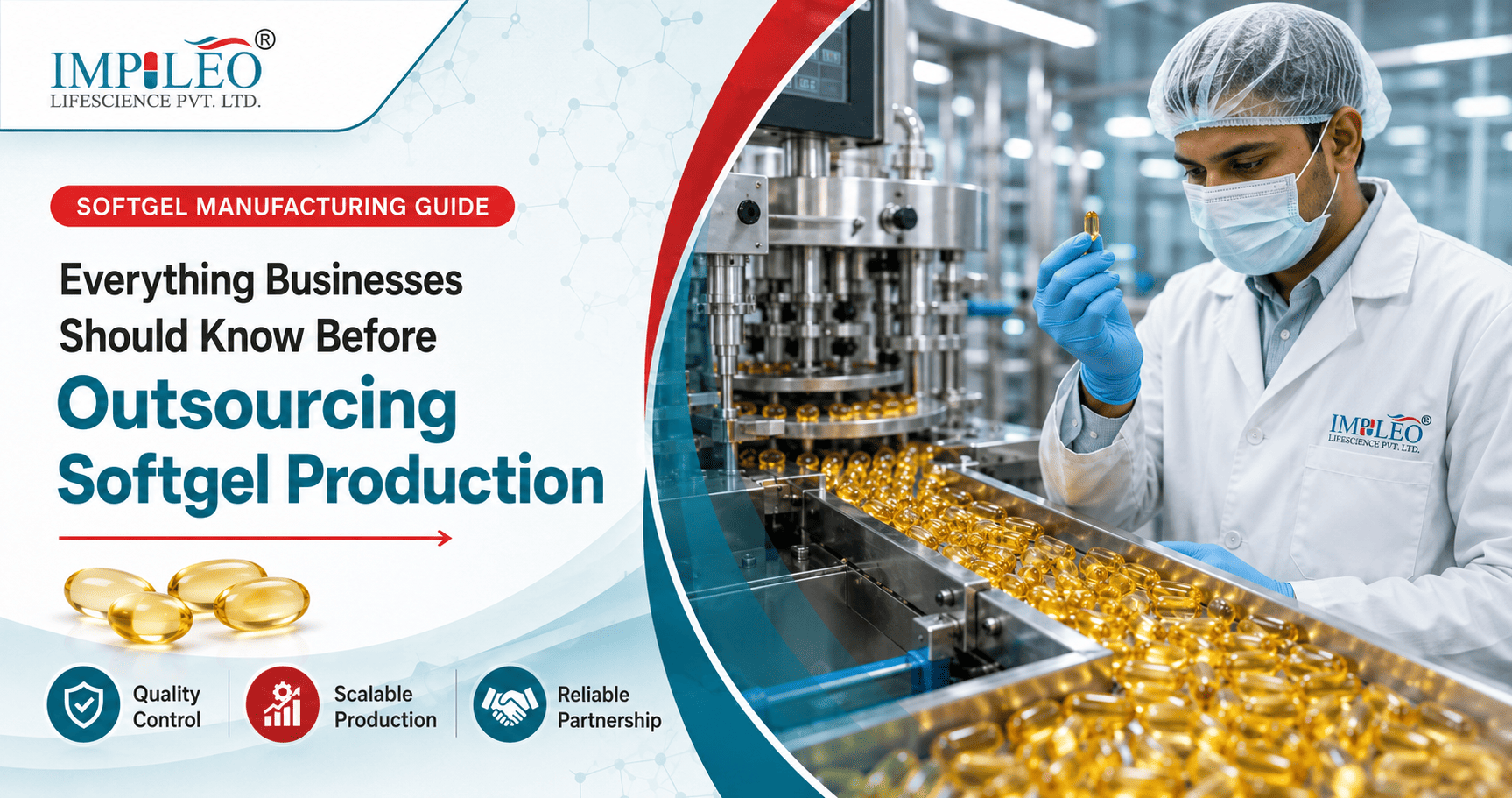
Outsourcing pharmaceutical and wellness products has become an increasingly practical strategy for businesses that want to expand their product portfolio without investing heavily in their own manufacturing infrastructure. Softgel capsules, in particular, have gained significant attention because they offer an effective and convenient dosage format for a wide range of pharmaceutical, nutritional, and wellness formulations. Businesses entering this segment often need to evaluate formulation capabilities, production standards, quality systems, packaging options, and the experience of their manufacturing partner before making a decision. For companies exploring reliable Softgel Capsule Manufacturers in India, understanding the complete outsourcing process can help reduce risks and create a stronger foundation for long-term growth.
Softgels are commonly used for formulations containing oils, vitamins, minerals, herbal extracts, antioxidants, and other ingredients that are suitable for liquid or semi-solid delivery. Their smooth outer shell, ease of swallowing, accurate dosing potential, and ability to protect certain sensitive ingredients have made them popular across pharmaceutical and wellness markets. However, producing a quality softgel is more complex than simply filling a capsule. The formulation, shell composition, encapsulation process, drying conditions, stability, testing, and packaging all need to work together to produce a consistent finished product.
For this reason, outsourcing softgel production is not simply about finding a company with available manufacturing equipment. Businesses need a partner that understands product requirements and can support the journey from formulation planning to finished packaging. A well-planned outsourcing arrangement can allow a brand to focus more on product development, marketing, distribution, and customer relationships while relying on an experienced manufacturing facility for production.
Why Businesses Are Choosing Outsourced Softgel Production
Setting up an independent production facility requires considerable investment in machinery, infrastructure, technical teams, quality systems, raw material management, and regulatory processes. For many businesses, especially growing brands and companies entering a new product category, building these capabilities internally may not be the most efficient option.
Outsourcing gives businesses access to established manufacturing resources without the immediate financial burden of developing an entire production setup. It can also provide greater flexibility when introducing new formulations or expanding an existing portfolio. Instead of managing every stage of production internally, the brand can work with a manufacturing partner that already has the necessary technical knowledge and operational processes in place.
The outsourcing model is also useful for businesses that want to test market demand before committing to large-scale investments. Depending on the capabilities of the manufacturing partner, brands may be able to discuss formulation requirements, packaging preferences, production quantities, and future scaling plans. This flexibility can be particularly valuable in fast-changing pharmaceutical and wellness markets.
Understanding What Makes Softgel Manufacturing Different
Softgel production involves specialized processes that differ from many conventional solid dosage formats. The shell and fill material must be compatible, and the encapsulation process requires careful control to achieve the desired product quality.
The fill material may contain oils, lipid-based ingredients, vitamins, nutritional compounds, or selected herbal extracts. At the same time, the shell must be formulated and processed to maintain the required strength, flexibility, and integrity. During production, the material is encapsulated, followed by drying and further quality evaluation before the product is prepared for packaging.
Factors such as moisture, temperature, viscosity, fill weight, capsule appearance, leakage, and stability can influence the finished product. This is why businesses should understand the technical capabilities of a potential manufacturing partner rather than selecting a provider based only on pricing.
A reliable production process should also include appropriate quality checks throughout manufacturing. The exact requirements may vary depending on the product category, ingredients, applicable regulations, and intended market. Discussing these requirements before production begins can help prevent misunderstandings later in the project.
Choosing the Right Manufacturing Partner
The success of an outsourced product often depends on the quality and reliability of the manufacturing relationship. Before selecting a partner, businesses should take time to understand the company’s production capabilities and whether they align with the product they want to develop.
Experience with relevant dosage forms can be important, particularly when a business has specific formulation requirements. A manufacturer should also have a clear approach to quality control, documentation, production planning, and communication. Transparency during the initial discussion can provide useful insight into how the company manages customer requirements.
Businesses should also consider whether the manufacturer can support future growth. A company may initially launch one or two products, but demand could increase over time. Working with a partner that can potentially support additional production requirements may make expansion easier.
Another important consideration is communication. Product development and manufacturing often involve discussions about ingredients, packaging, specifications, production timelines, and quality expectations. A responsive manufacturing partner can help ensure that both sides have a clear understanding of the project.
The Role of Third-Party Manufacturing in Business Growth
For many brands, Third-party manufacturing provides a practical route to entering the pharmaceutical or wellness market without establishing an independent production facility. Under this model, a specialized manufacturer handles production while the brand focuses on building its market presence and managing sales or distribution.
This approach can be particularly beneficial for businesses that want to introduce products under their own brand identity. The manufacturing partner may support the production process according to agreed specifications, while the business concentrates on branding, marketing strategy, and customer development.
The effectiveness of this arrangement depends on clear communication between both parties. Product specifications, approved formulations, packaging requirements, production schedules, and quality expectations should be discussed before manufacturing begins. A well-defined process can help minimize delays and ensure greater consistency throughout the project.
Outsourcing can also allow businesses to explore new product opportunities more efficiently. Instead of investing in separate equipment for every dosage form, a company can work with manufacturing partners that have expertise across relevant categories.
Formulation Planning Before Production Begins
A successful softgel product begins with a clear formulation concept. Businesses should first identify the purpose of the product, its intended market, the ingredients involved, and the desired dosage format. These factors can influence the selection of raw materials and the overall manufacturing approach.
Ingredient compatibility is especially important in softgel formulations. The physical and chemical characteristics of the fill material can affect the manufacturing process and the performance of the finished capsule. For this reason, formulation discussions should take place before large-scale production begins.
Companies involved in Nutraceutical manufacturing may also need to consider factors such as ingredient sourcing, stability, label requirements, and the expectations of their target consumers. Nutritional products can contain vitamins, minerals, fatty acids, antioxidants, and other wellness-focused ingredients, making softgels a suitable format for many product concepts.
The formulation stage should not be rushed. A carefully planned product can help reduce manufacturing challenges and support better consistency once production moves to a larger scale.
Quality Control and Manufacturing Standards
Quality should remain one of the most important considerations when outsourcing any pharmaceutical or wellness product. Businesses should understand how their potential manufacturing partner approaches raw material evaluation, in-process checks, finished product testing, documentation, and packaging controls.
The specific quality and regulatory requirements may depend on the product category and the markets where the finished product will be distributed. Businesses should therefore discuss applicable standards directly with the manufacturer rather than assuming that every product follows identical requirements.
Softgel capsules also require careful attention to physical quality. Appearance, shell integrity, fill consistency, leakage, and stability are among the factors that may need to be evaluated during the manufacturing and quality control process.
A transparent approach to quality management can help businesses build confidence in their manufacturing relationship. It also supports better planning when a product is intended for distribution across different markets.
Packaging and Product Presentation Matter
Manufacturing does not end when the softgel is produced. Packaging plays an important role in product protection, shelf presentation, transportation, and brand identity. Depending on the product and market requirements, businesses may need to consider packaging formats that help maintain product quality throughout its intended shelf life.
The choice of packaging should be discussed early in the project because it may influence production planning and overall costs. Labels and product information should also be reviewed carefully to ensure they are appropriate for the intended product category and market.
For businesses developing a broader healthcare portfolio, it can be useful to work with a manufacturing partner that understands multiple dosage forms. In addition to softgels, Capsule manufacturing can support product diversification when a formulation is better suited to a conventional hard capsule format. Different dosage forms can serve different product concepts and consumer preferences.
Managing Production Timelines and Supply Requirements
Production planning is another important part of outsourcing. Businesses should discuss expected timelines before finalizing a manufacturing arrangement. Raw material availability, formulation complexity, packaging requirements, production schedules, and quality procedures can all influence delivery timelines.
Clear forecasting can help manufacturers plan production more effectively, while businesses can better manage inventory and distribution requirements. This becomes particularly important as product demand grows.
A long-term manufacturing relationship can also support better planning. When a manufacturer understands a company’s product range and expected requirements, future production may become easier to coordinate. However, businesses should maintain open communication and regularly review their production needs as market conditions change.
Expanding Beyond a Single Dosage Form
A growing business may eventually want to expand beyond softgel products. This is where broader manufacturing capabilities can become valuable. Depending on the formulation and market strategy, some products may be more suitable for tablets, capsules, powders, syrups, or other dosage formats.
For example, Tablet manufacturing may be suitable for certain pharmaceutical and nutritional products where precise solid dosing, convenience, and large-scale production are important. Softgels, on the other hand, can be more suitable for oil-based or liquid formulations. The decision should be based on formulation requirements rather than simply following market trends.
Similarly, companies developing natural wellness products may explore Herbal manufacturing for formulations based on plant-derived ingredients and traditional wellness concepts. The choice of dosage form and manufacturing approach should depend on the characteristics of the ingredients and the goals of the product.
A business that understands these options can develop a more balanced product portfolio over time rather than relying on only one type of formulation.
Common Challenges Businesses Should Prepare For
Outsourcing can provide significant advantages, but it also requires careful planning. One common challenge is unclear product specifications. If a business has not clearly defined its formulation, packaging, or quality expectations, the manufacturing process may become more complicated.
Another challenge can be selecting a manufacturer based solely on the lowest price. Cost is important, but it should be evaluated alongside production capability, quality systems, communication, reliability, and long-term suitability. An inexpensive option may not always provide the level of support needed for a successful product launch.
Businesses should also avoid making assumptions about production timelines or regulatory requirements. Every product can have different needs, and it is important to discuss these details with the manufacturing partner before finalizing the project.
Careful planning at the beginning can help prevent many of these issues. A clear manufacturing agreement, well-defined specifications, and consistent communication can create a stronger working relationship.
How Outsourcing Can Support Brand Expansion
One of the biggest advantages of outsourcing is that it allows businesses to focus their internal resources on areas such as branding, marketing, distribution, and customer relationships. Instead of managing manufacturing infrastructure, companies can concentrate on building demand for their products.
This approach can also be useful for businesses operating through distribution or franchise models. PCD franchise services, for example, may benefit from a well-managed supply of quality products and a broader product portfolio. A dependable manufacturing arrangement can support businesses that need consistent product availability while they focus on expanding their distribution network.
The ability to introduce multiple product categories can also create new opportunities for growth. However, expansion should be planned carefully. Each product should have a clear purpose, appropriate formulation, and suitable manufacturing process.
Building a Long-Term Manufacturing Relationship
The best outsourcing relationships are usually built on more than a single purchase order. As a business grows, its manufacturing requirements may change. Product quantities may increase, new formulations may be introduced, and packaging requirements may evolve.
A manufacturing partner that understands these changing needs can become an important part of long-term business growth. This requires communication, realistic planning, and a shared understanding of product expectations.
Businesses should regularly review product performance and future requirements with their manufacturing partner. This can help identify opportunities for improvement and make future production planning more efficient.
Companies such as Impileo Lifescience Pvt. Ltd. operate within a broader manufacturing environment that includes pharmaceutical and wellness product categories, giving businesses the opportunity to explore different dosage forms according to their product requirements. The most suitable manufacturing arrangement will always depend on the specific formulation, business model, quality expectations, and target market.
Final Thoughts
Outsourcing softgel production can be a practical option for businesses that want to enter or expand within pharmaceutical, nutraceutical, and wellness markets without developing their own manufacturing infrastructure. However, choosing the right partner requires more than comparing prices. Businesses should carefully evaluate manufacturing expertise, formulation support, quality practices, communication, packaging capabilities, and the ability to support future growth.
The growing demand for convenient and versatile dosage forms continues to create opportunities for brands developing innovative products. By working with experienced Softgel Capsule Manufacturers in India, businesses can focus more effectively on building their brand while collaborating with manufacturing specialists for the technical side of production.
A well-planned outsourcing strategy can support product diversification, operational efficiency, and long-term growth. Whether a company is launching its first softgel product or expanding an established portfolio, the key is to begin with a clear product concept and build a manufacturing relationship based on quality, transparency, and realistic expectations.
Frequently Asked Questions
What should businesses consider before outsourcing softgel production?
Businesses should evaluate the manufacturer’s experience with softgel formulations, production capabilities, quality control processes, documentation practices, packaging options, communication standards, and ability to meet expected production timelines. It is also important to clearly define the product specifications before manufacturing begins.
Why are softgel capsules popular for pharmaceutical and wellness products?
Softgel capsules are widely used because they can accommodate liquid and semi-solid formulations, including oils, vitamins, nutritional ingredients, and selected extracts. They are also known for their smooth format and convenient consumption experience.
Can a business outsource softgel manufacturing under its own brand?
Yes, many manufacturing arrangements allow businesses to develop products for their own brand, subject to the capabilities and agreed terms of the manufacturing partner. Requirements related to formulation, packaging, labeling, documentation, and production quantities should be discussed before starting the project.
What is the difference between softgel and hard capsule manufacturing?
Softgels generally contain liquid or semi-solid formulations enclosed in a flexible shell, while hard capsules typically consist of two-piece shells that can contain powders, granules, or other suitable materials. The most appropriate format depends on the formulation and intended product application.
How can businesses choose a reliable softgel manufacturing partner?
A reliable partner should be evaluated based on relevant manufacturing experience, quality practices, technical capabilities, communication, production planning, and the ability to understand the specific requirements of the product. Businesses should avoid choosing a manufacturer based only on price.
Can softgel production support nutraceutical and herbal product brands?
Softgels can be used for a variety of suitable nutritional and wellness formulations, including certain oil-based ingredients, vitamins, fatty acids, and selected extracts. The suitability of a specific ingredient or formulation should be evaluated during product development.
Is third-party manufacturing suitable for growing businesses?
Third-party manufacturing can help growing businesses access established production infrastructure without investing immediately in their own manufacturing facility. It may allow companies to focus more on branding, marketing, distribution, and market development while working with a specialized production partner.
Can businesses expand into other dosage forms after launching softgel products?
Yes. Depending on their product strategy and formulation requirements, businesses may later explore tablets, conventional capsules, herbal products, powders, syrups, or other suitable formats. The choice should be based on the product’s technical requirements and target market.